
In the novel The Bridge on the Drina by the Yugoslav Nobel laureate Ivo Andrić, the bride Fata Osmanagić, married against her will, casts herself out of defiance and despair, during her wedding procession, from the world-famous bridge of Mehmed Paša Sokolović into the cold waters of the river Drina, and thus into death. The builder himself was a Serbian peasant boy, abducted by the Ottomans in the course of the so-called levy of boys, who over his long life rose even to grand vizier and set this monument of stone in his homeland: a bridge over that river which divides Occident and Orient — the former border of Eastern and Western Rome, and then, after the great Western Schism, the border between Catholicism and Orthodoxy. When the Ottomans pressed into the Balkans, conquered wide tracts of land, and a part of the South Slavic population was brought over to Islam, the religious fragmentation of this region was sealed once and for all.
To the Turkish language the Yugoslavs owe a word that can only inadequately be rendered as ‘defiance’: Inat. This feeling may have moved Sokolović to build the bridge, and Andrić surely had it in mind as the fictional bride throws herself into the flood. That very Inat may also have moved the Croatian women — and, more rarely, men — above all in Bosnia, who had remained faithful to the Catholic faith, over the many centuries of Ottoman occupation, to have Christian ornaments, with the cross as their central motif, tattooed upon visible parts of the body: fingers, hands, forearms and upper arms, the breast, and even the brow. For these indelible marks one used simple needles, and for the ink a mixture of charcoal, soot, honey and the breast-milk of women in childbed. This custom was called ‘Bocanje’ — that is, ‘pricking’ — and the motives were, besides conjectured Illyrian traditions now surely lost forever in the thicket of history, above all the hoped-for protection against a forcible conversion to Islam, against the abduction of the women and the carrying-off of the boys into the units of the Janissaries (that very fate which had befallen the vizier Sokolović). Even where such things could not be prevented, one hoped nonetheless, even under forced deportation, to preserve the Christian and national identity of the abducted. The cross was to admonish the Croats of their faith, and the initials of the name, which were often added too, to recall their nationhood. It was surely also the Catholics’ veneration for the dynasty of the Kotromanić — that short-lived Bosnian kingdom, with its beheaded king Stjepan, his consort, the fugitive queen Katarina, and their two children, carried off into Turkey — that these tattoos were meant to express.
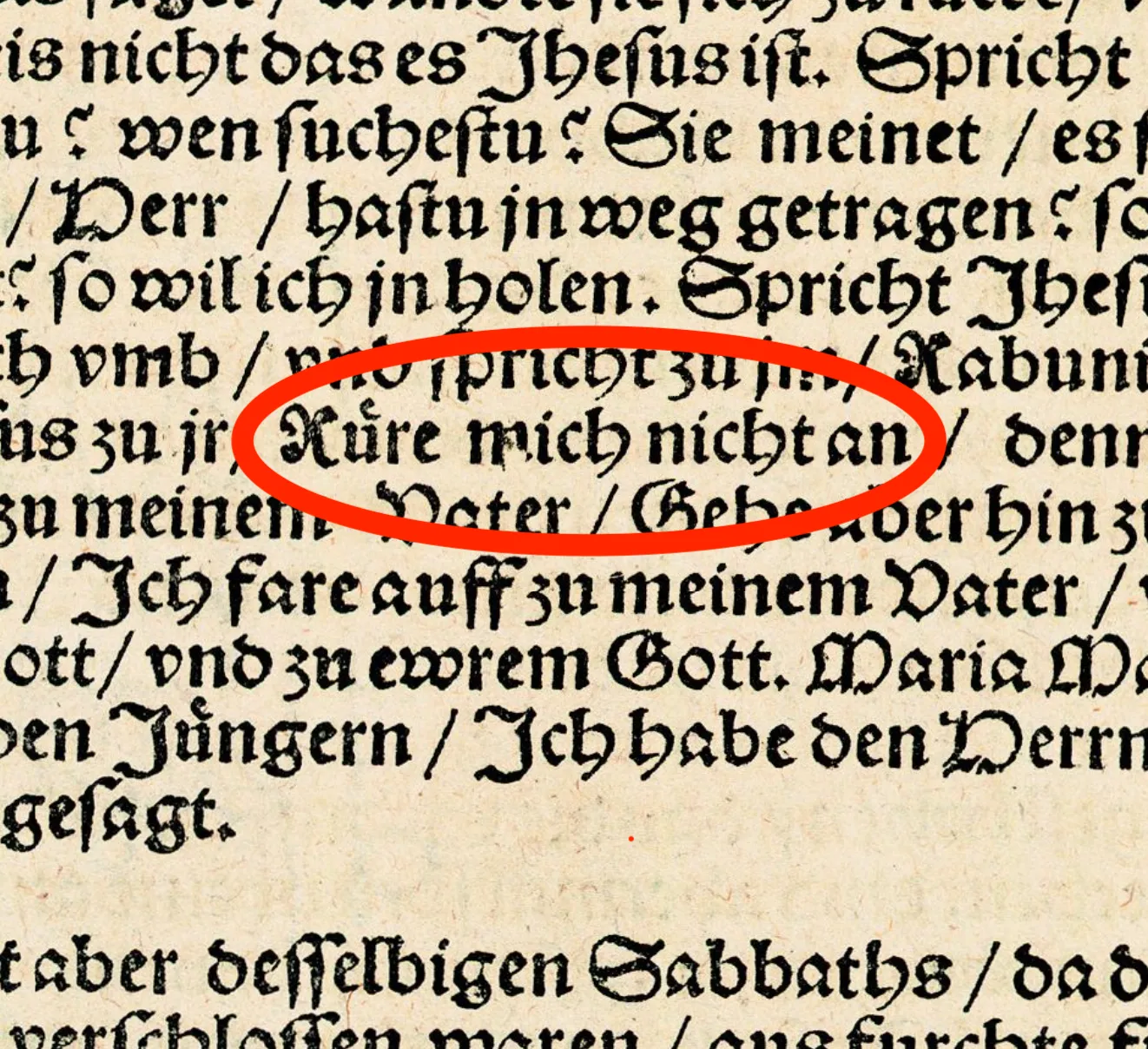
‘…a character indelebilis, an ineffaceable mark upon the soul of the faithful.’
The Ottomans at last vanished, and the wheel of history turned on; allies and arch-enemies exchanged their roles, again and again, upon the stage of the great theatre of the world, and today these traditional tattoos have almost entirely disappeared — as has the archaic-seeming, rural-peasant milieu from which these women came. Today’s tattoos among the Croats (upon which Adolf Loos pronounced his famous verdict) scarcely differ from those in other, Western lands. Now, the phenomenon here described in brief may of course be regarded from various perspectives — as, say, the testimony of faith of a minoritised group, delivered up for better or worse to the victors and permanently at the edge of annihilation. According to Catholic teaching, the sacraments of baptism, confirmation and also the three sacraments of ordination are a character indelebilis, an ineffaceable seal upon the soul of the faithful, much like the religious tattoos on arms and hands here discussed. Did one wish, as it were, to confirm this indestructible, invisible mark of grace by an indelible brand upon the skin as well? Or was it perhaps even the wise insight into, and confirmation of, the dogma Grace presupposes nature and perfects it — and a constant, irrevocable reminder to live one’s Christian faith in the world and to confess it, to keep a perpetual admonition not to sin and not to deny oneself? ‘The hearts have long been drifting in the current of the vast,’ says the poet Benn, and so it is with the truly courageous testimony of faith of the Croatian women. Phenomena such as Islamic expansion, or Communism, one may perhaps be able to resist by such an act, but whether it can also protect the faithful against the temptations of the present — hedonism and materialism — is highly questionable. How much, indeed, do the crosses that adorn the tattoos of modern people recall talismans worn proudly in the restless race for money and pleasure in the Calvinist-capitalist modernity of which Max Weber spoke. How much, today, do the religious exercises of many a Christian testify more to the pride of Cain than to the humility of the Mother of God … fiat mihi secundum verbum tuum …
‘Now her defiled skin felt like a shirt of nettles, grown into the flesh, leaving no possibility of escape.’ So it runs in Doderer’s tale The Tattooed Woman, and it is a wonderful, poetic description of all those signs and marks that a person cannot remove again, which are inescapably bound up with him. There came to my mind, beside the tattoo, such things as amputation, circumcision, the duelling student’s Schmiss, but also physiognomy, skin colour — indeed, Platonically speaking, the body as such. Yet the greatest and clearest indelible sign that a person bears with him is, I believe, his life itself: his doing, his forbearing, and finally the words he wrote and spoke. How I hope that the marked self of us all will be transfigured into a beautiful, new being — that our scars, of body and of soul, may be healed at the resurrection of the flesh.
What remains of the custom of the Croatian women? A historical detail, at any rate — but if one grasps the history of mankind as a history of salvation, then no event is arbitrary, none is mere ornament; everything strives, so I would believe, toward reconciliation, however difficult it may be to comprehend. In the year 1941, members of the ‘Yugoslav Army in the Fatherland’, under the command of Major Jezdimir Dangić, murdered five Catholic nuns, and their martyred bodies were thrown, together with tens of thousands of corpses of murdered Bosnian Muslims, into the waters of the Drina. Perhaps some of the venerable sisters too bore the traditional Croatian tattoos upon their arms and hands, and went with them into martyrdom…? So I think sometimes, and a verse of the Croatian poet Tin Ujević comes to my mind, in which he says that the blood that is shed — the common defeat of mankind in war and atrocity — is yet only a common history of all souls.
EXPLICIT