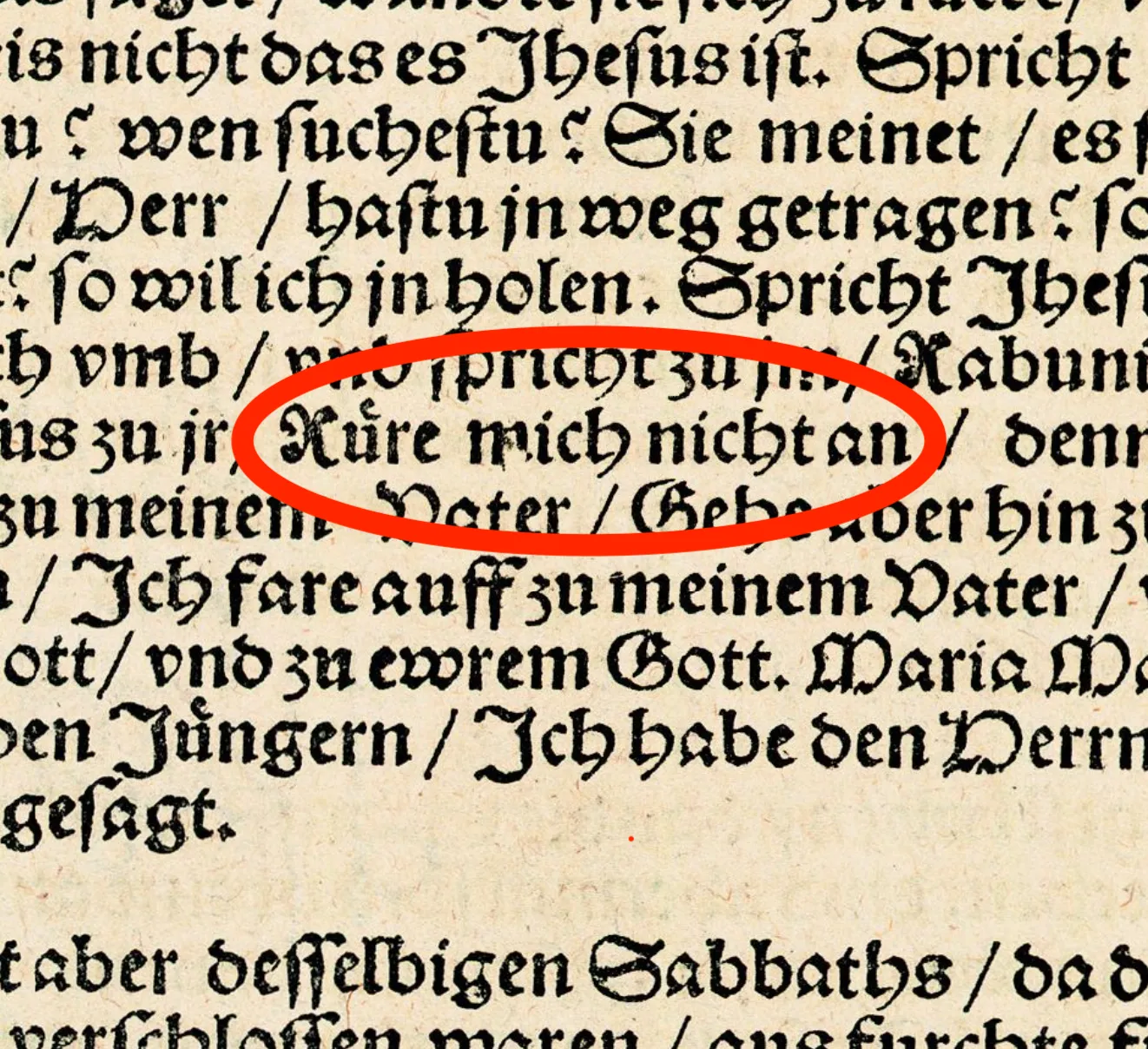

In one of her summer Instagram stories the other day, Betony Vernon’s right forefinger could be seen sinking, with gentle pressure, into a little Agatha cake — right there beside one of the candied cherries that, on the pink-glazed surface of the dome-shaped confection, stand in for the nipple. The feast of St Agatha has always fallen on 5 February. That Mistress Vernon — who herself has the finest breasts among the living — has Minne di Sant’Agata brought to her on other days too points up the kinkiness of this martyr’s dish.
That someone would rather die for a conviction than conform appears, depending on the perspective one takes, either foolish or heroic. With the martyrs it is, moreover, the manner imposed on them of reconsidering their decision that separates the noble hero’s death from martyrdom. At least this holds for the early martyrs, the ones who have passed into myth. In the later course of Church history not only does their number steadily grow; increasingly, too, those put to death in a rather civilised manner — meaning: without physical torture — come to be declared martyrs. One example is Maximilian Kolbe, a Catholic priest who, in the Auschwitz concentration camp, had himself executed by phenol injection in place of a fellow prisoner seized after an escape attempt. Kolbe was beatified in 1971 by Pope Paul VI. In the early eighties his canonisation by John Paul II then followed, on the grounds of his martyrdom. Since then St Maximilian Kolbe, whose feast is kept on 14 August, has also been patron saint of, among others, CB-radio operators and drug addicts. With both attributions one can only marvel at the counsel of the Holy See. Perhaps his martyrdom by injection of a chemical substance prompted the feedback where junkies are concerned.
That the cult of St Agatha was fashioned in a less shabby, incomparably more splendid, more imagination-kindling and, above all, culinarily interesting way has of course to do with her less shabby, more splendid martyrdom, which has stirred the imagination for centuries — the martyrdom to which we, Betony Vernon included, ultimately owe the delicious breast tartlets. There is such Agatha pastry in Switzerland too, where it is — no surprise there — brittle and ring-shaped (ringli, in the Swiss diminutive), so that it can now recall the symbol of a breast pictogram only in the abstract.
No one really knows, after all, whether Agatha ever existed at all. The whole story could just as well be a product of fantasy — even that of some Agatha herself. Mishima, famously, had indulged since puberty in extravagant Sebastianades. It is surely no exaggeration to say that the manner of self-killing he ultimately chose — the opening of the lower abdomen by a cut drawn horizontally with the short dagger from the heart’s side across to the liver — was meant to lead him into a realm of death comparable, in the quality of its torment, to that of St Sebastian. Whether the Yule log served at Christmas in the French bourgeoisie is really meant to symbolise that tree against which Sebastian was pierced by the arrows — as the monarchist Jean Raspail lately still maintained — and likewise whether the Japanese code, in which seppuku remains central and to this day barely sublimated, can know anything comparable to our martyrdom at all, shall not be pursued further here.
In Agatha’s case what interests us above all is the reason she was made a martyr. According to legend it was a Roman who wished to bed the young Christian woman. To break her resistance he forced her into prostitution, where she nonetheless managed to preserve her virginity. To bring her round after all, he then had both her breasts cut off. Since her steadfastness seemed irreversible, her martyrdom found its finale on a gridiron over the embers, where, in her virginal state, she was grilled to death.
That from this symphony of intolerable cruelties the amputation of the breasts was singled out and dressed up for cultural exaltation speaks of a keen sense for marketing. Not only are there paintings of Agatha surviving to this day that show her with her breasts on a dish, a serving platter and the like. There are also the cakes. And in earlier times, when the relic trade still mattered, when crusades were still pilgrimages, there were surely also waxen images of Agatha’s breasts, hawked roadside to the pilgrims.
In the Middle Ages, before the invention of printing — an incomparably more imagination-kindling age — the production of candles and votive images in wax was bound up with the production of confectionery. In this era, which also lies before the invention of refined sugar, colonies of bees supplied both wax and honey. Whoever drew candles also made votive images. And as nourishing fare the Lebzelter offered what were called Lebkuchen. It is quite possible that it was one of these Lebzelter who, inspired by the legend of Agatha’s martyrdom, devised an early form of the little Agatha breasts. In Sicily, where — alongside Calabria — the cult of Agatha is still kept up vividly to this day (and, in the form of this peculiar oral communion, savoured as well), so-called Frutta di Martorana were made very early on from marzipan, which had come from the Arabs: replicas of fruit as lifelike as possible, distributed as alms to the poor, who could not afford the originals. Poverty, too, is nothing but a martyrdom. Most, admittedly, would gladly recant — only they do not know the password.
The effect the martyr saint’s severed cake-breasts were meant to trigger on the palates of the faithful may be imagined as much the same as that of the symbolic fruits: the bitterness that is simply proper to truth is transcended by the sweetness of the martyr’s dish. For the moment of culinary enjoyment, of the childlike biting-through, as Michael Balint called it, the one who is in reality bound beholds another realm.
The erotic enjoyment of martyrdoms, on the other hand, from which Mishima could still profit, is gradually becoming difficult. The profanation of ritualised suffering has advanced. The style-forming power of the Catholic Church is barely present any longer. Even in Rome the shrines in the relic processions have lately been carried about chiefly by African bearers, since even at the Holy See the so-called shortage of skilled labour is making itself felt. Only in the developing countries is there still new blood. Here the commodity Hope still finds fertile markets, and young people, too, can imagine nothing lovelier than a life in God.
Of the belief in St Agatha, one day probably only the Minne di Sant’Agata will survive. Presumably also the reason why, despite the blessed Gunther von Hagens’s Body Worlds, as I peel with relish the skin from a grilled chicken at City Chicken I must still think of the martyrdom of poor Bartholomew.
Or want to?
EXPLICIT